Product
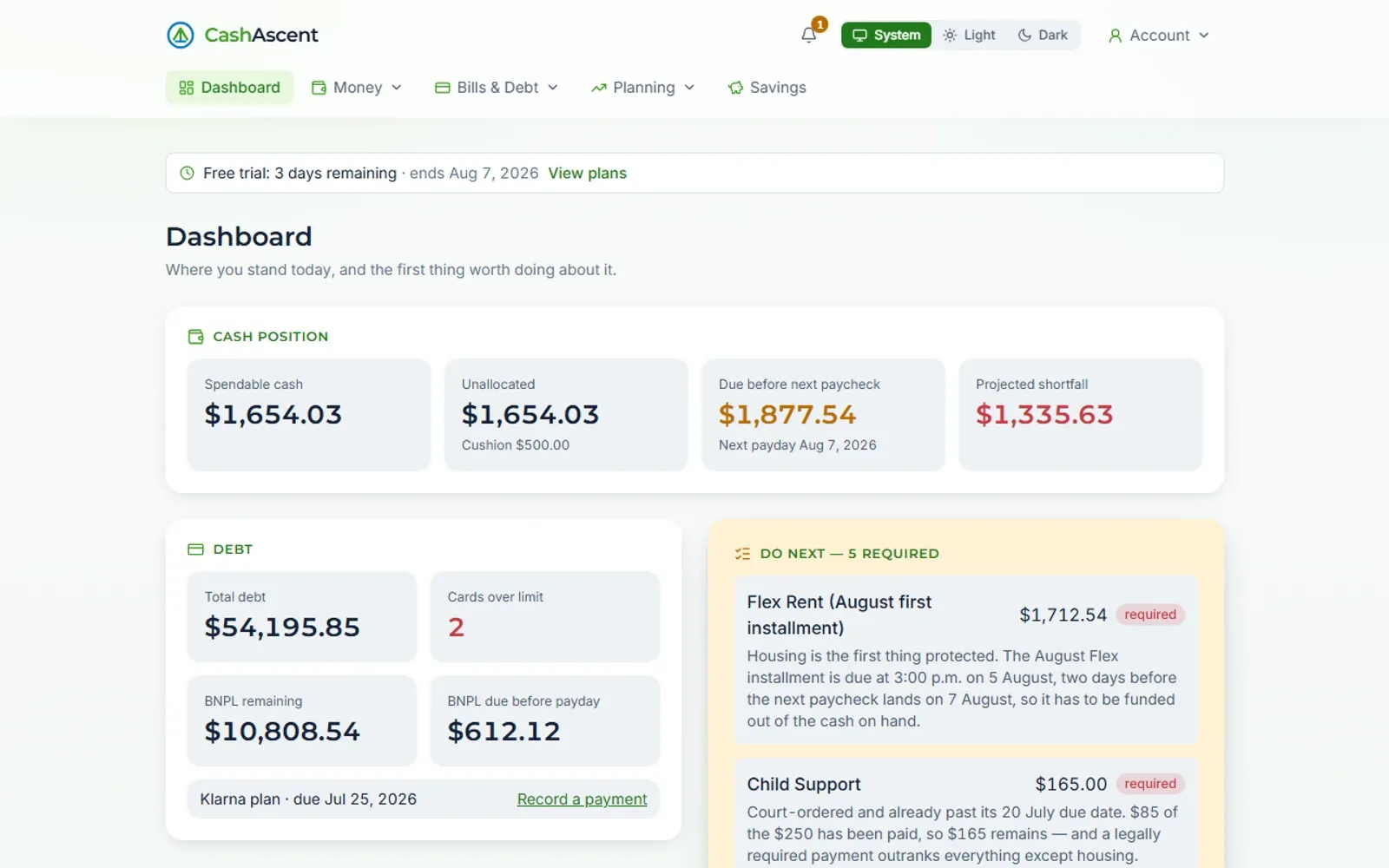
CashAscent
A personal finance app that turns income, bills, debts, buy-now-pay-later installments, reserves, and goals into a plan you can follow one paycheck at a time.
- .NET 10
- FastEndpoints
- EF Core
- Dapper
- SQL Server
Software architect · Author
I design .NET systems that have to last, and I write about how to build them.
I've been developing software professionally since 2010. These days most of my time goes into architecture: Domain-Driven Design, Clean Architecture, and the decisions that keep a codebase easy to change years after it ships.
What I do
Good architecture isn't about how many patterns you can fit into a solution. It's about what the system will need six months from now, and who has to maintain it.
I design systems around the business they serve. That means boundaries that mean something, rules that live in one place, and a structure the next developer can follow without a tour guide.
I don't just draw diagrams. I build and ship software, from enterprise systems people use every working day to CashAscent, a personal finance product I designed and built end to end.
I explain why an approach exists before showing how to implement it. The goal isn't to make architecture look complicated. It's to make complicated architecture feel understandable.

Understand how it works.Find out why it doesn't.Then figure out how to make it work better.
I grew up on Montserrat, taking apart televisions and stereos that people had thrown away, trying to understand why they stopped working. At nine I met DOS and Where in the World Is Carmen Sandiego?, and the machine quickly became more interesting than the game. The systems I work on now are a lot bigger. The instinct is the same.
The new book
Domain-Driven Design, Clean Architecture, Vertical Slices, and SOLID in ASP.NET Core
This book teaches Domain-Driven Design, Clean Architecture, vertical slices, and the SOLID principles the second way, without making you wait years for it. It follows one example system, a multi-tenant student information system, from the first commit to an application that's ready to operate. One running system serves many school districts, and each district's data has to stay its own. So every pattern has to earn its place against realistic constraints.
Also by me: C# Cheat Sheet: The Keywords. Available in paperback on Amazon.
Built on .NET 10 (LTS), ASP.NET Core Minimal APIs, Entity Framework Core, Dapper, SQL Server, xUnit.
Selected work
Product
A personal finance app that turns income, bills, debts, buy-now-pay-later installments, reserves, and goals into a plan you can follow one paycheck at a time.
Book
Domain-Driven Design, Clean Architecture, vertical slices, and SOLID, taught on one realistic system from the first commit to an application that is ready to operate.
Professional work
Most of my day-to-day work is on internal enterprise .NET systems. The code stays private, but the kind of work doesn't.
Get in touch
Whether it's a question about a chapter, an invitation to speak, or a design problem you're working through, I'd like to hear about it.